Find your way around the app
A tour of the RoboLedger app, page by page. Where to see your ledger, statements, the close, reports, plans and the concepts your accounts map to.
Most of the work in RoboLedger happens in a conversation with Claude. The app at roboledger.ai is where you connect your books, see what Claude is working from, and review what it did. Everything Claude reads and writes is visible here.
The screens below show Cadence Labs, a made-up company used for demos.
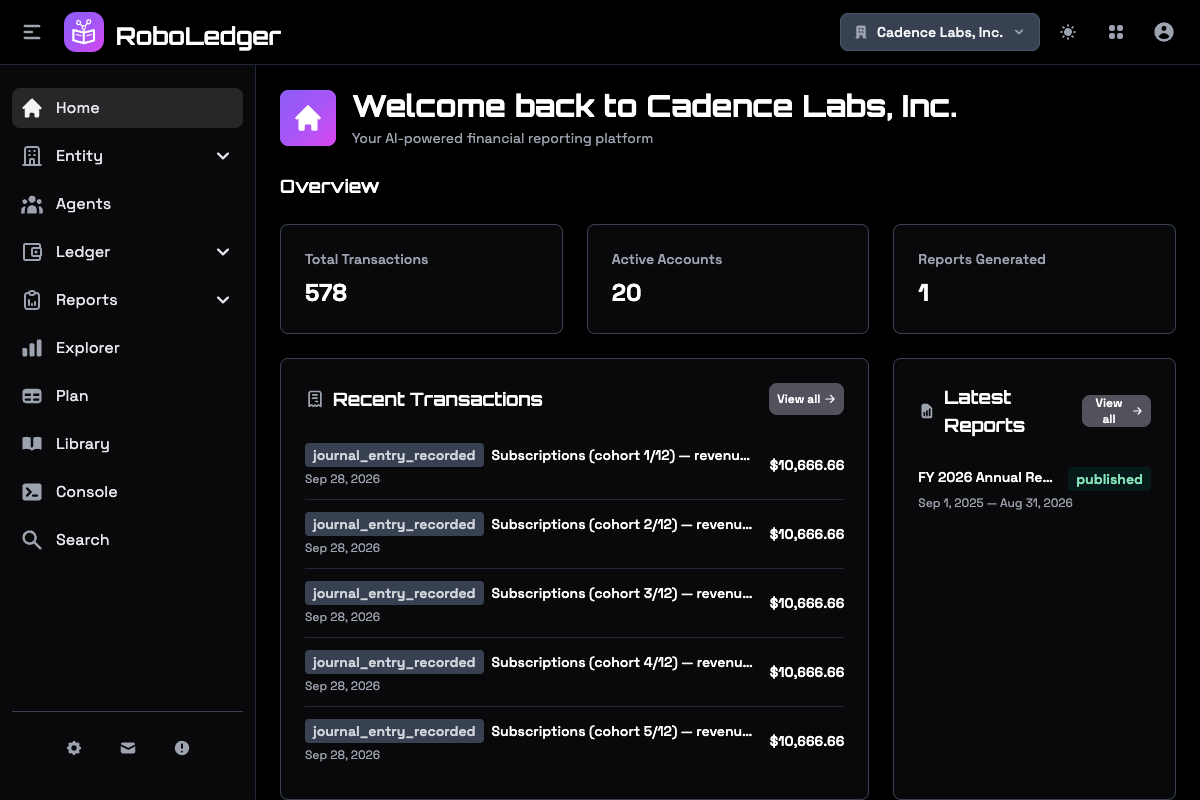
The menu at the top right picks the company you're looking at, if you have more than one. Home shows recent transactions, your latest reports and shortcuts.
Entity
- Entity Info holds your company's details.
- All Entities lists every company across your graphs.
- Connections is where you connect QuickBooks, press Sync Now, choose sync options, and disconnect. See Connect your books to Claude.
Agents
The people and companies you do business with: customers, vendors and employees. They come over from QuickBooks, and each one opens to its details and activity.
Ledger
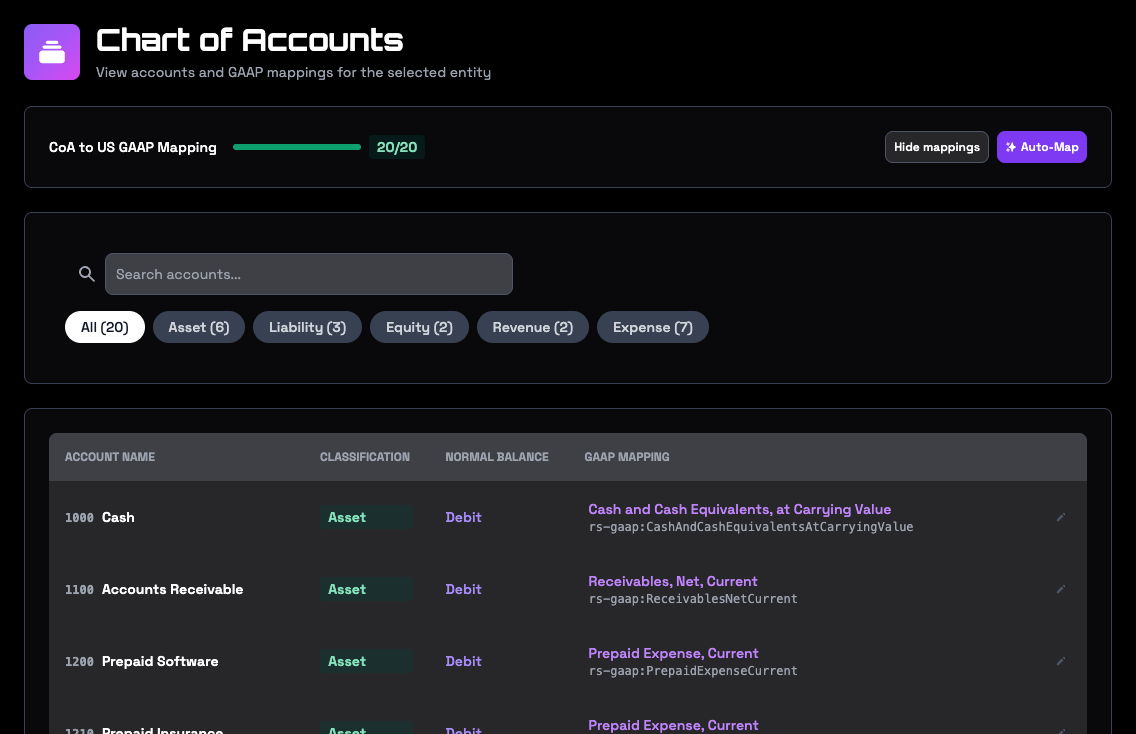
Chart of Accounts lists your accounts. Show mappings adds the reporting concept each account is mapped to, and the bar at the top shows how much of the chart is covered. See Map your chart of accounts.
Inbox holds events that have been captured and haven't posted to the ledger yet, so you can review and approve them first.
Journal is every journal entry with its lines, in posting order, and a second tab for transactions. You can create a manual entry here.
Trial Balance shows each account's debits and credits, and whether they agree.
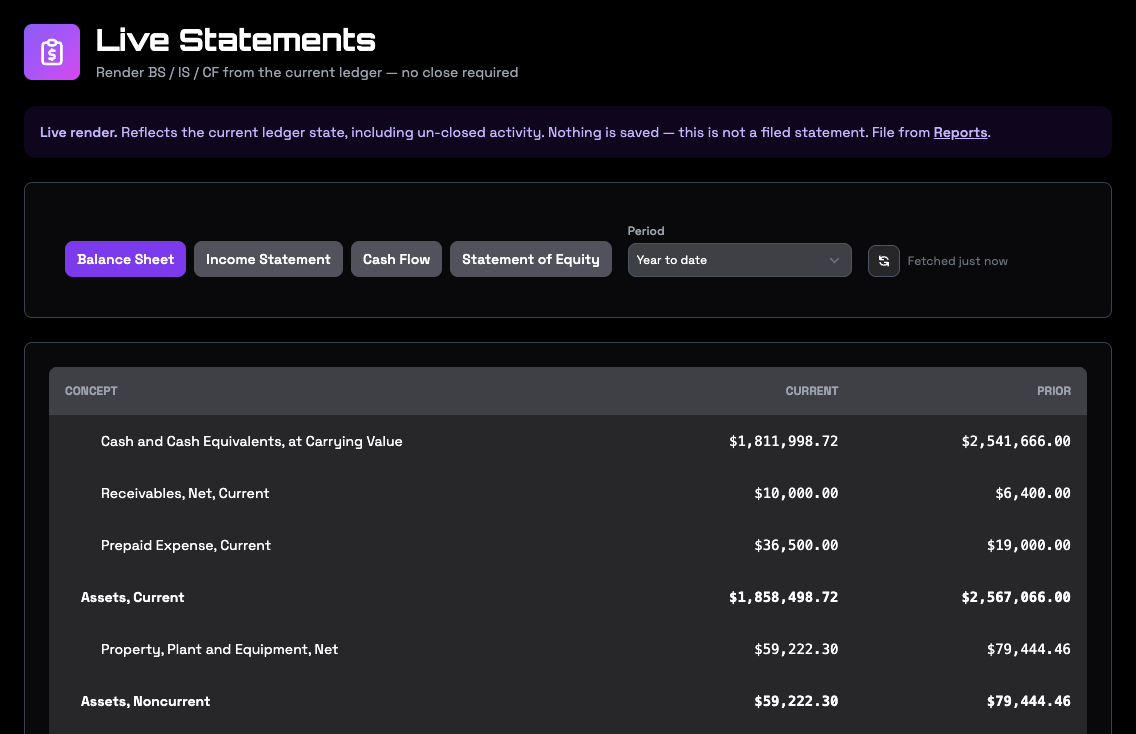
Statements shows the balance sheet, income statement, cash flow and statement of equity straight from the current ledger, for any period. Nothing is saved, and no close is needed.
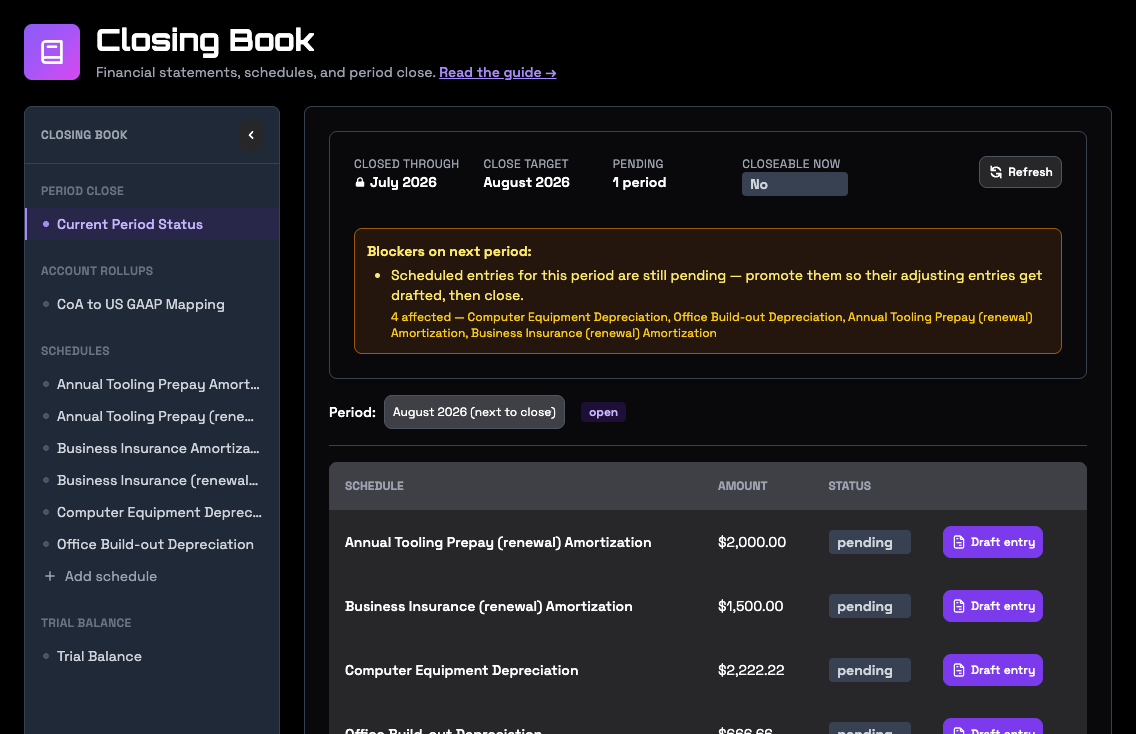
Closing Book is where the month-end close lives. The period close view shows the last closed month, the month you're working towards, what's blocking it, and each schedule's entry for the month. Beneath it are your account mapping, your schedules and the trial balance. See Close the month with Claude and Schedules for recurring entries.
Reports
- View Reports lists the reports you've created. Open one to read its statements and notes, download it, or share it.
- Create Report builds a report for a period: this month or last, this quarter or last, monthly year to date, a full year by month, year over year, or dates you choose.
- Publish Lists are the sets of graphs you send reports to.
- Blocked Senders are graphs you don't accept reports from.
See Reports and sharing.
Explorer
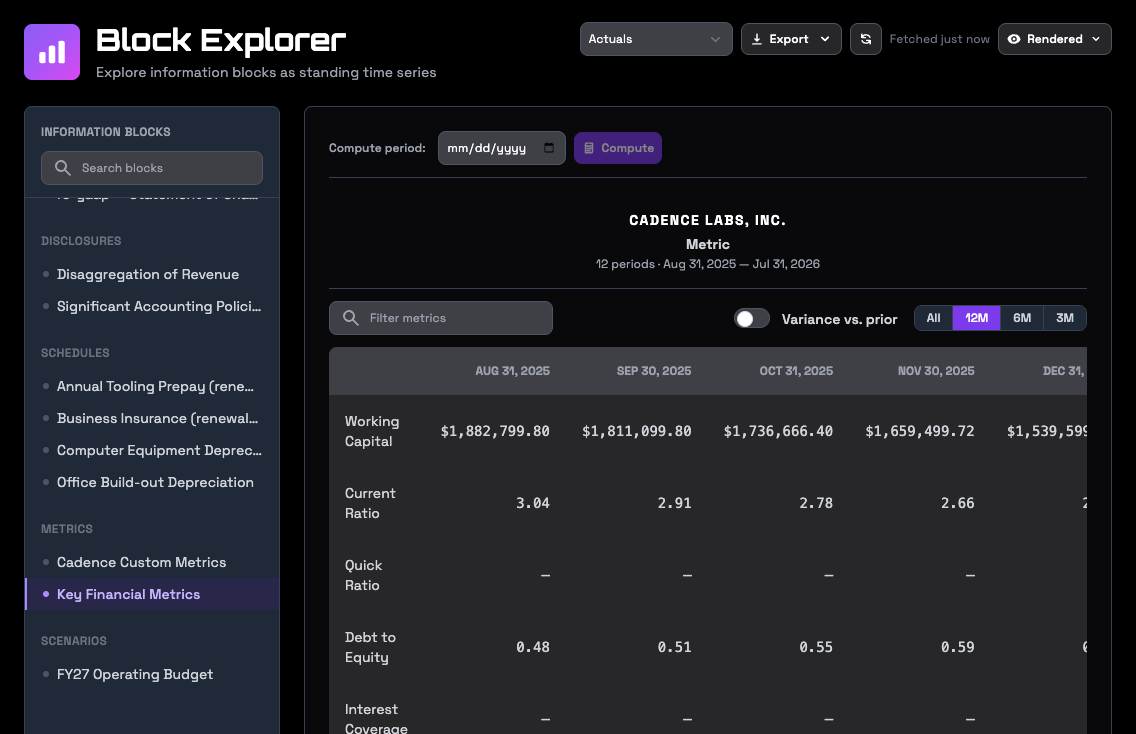
Explorer opens any statement, note, schedule, set of ratios or scenario as a series over time. Switch between the rendered table, a chart, the facts behind it, the accounts and concepts it's built from, and the checks it passed. Export any view as CSV or JSON.
Plan
Your statements and a scenario's assumptions in one monthly grid, with actual months on the left and forecast months on the right. See Plan and forecast with Claude.
Library
The reporting concepts your accounts map to, with their definitions and how they roll up into each statement. Look here when you're deciding where an account belongs.
Console
Ask questions about your books inside the app. The Console runs on RoboLedger's own AI, so it uses credits from your plan's monthly allowance. Claude, ChatGPT and other clients you connect yourself don't use credits.
Search
Finds text across the documents in your graph, such as accounting policies and close procedures.
Your account
Your password, passkeys, API keys, usage and billing are in your RoboSystems account at robosystems.ai. The user menu at the top right takes you there.